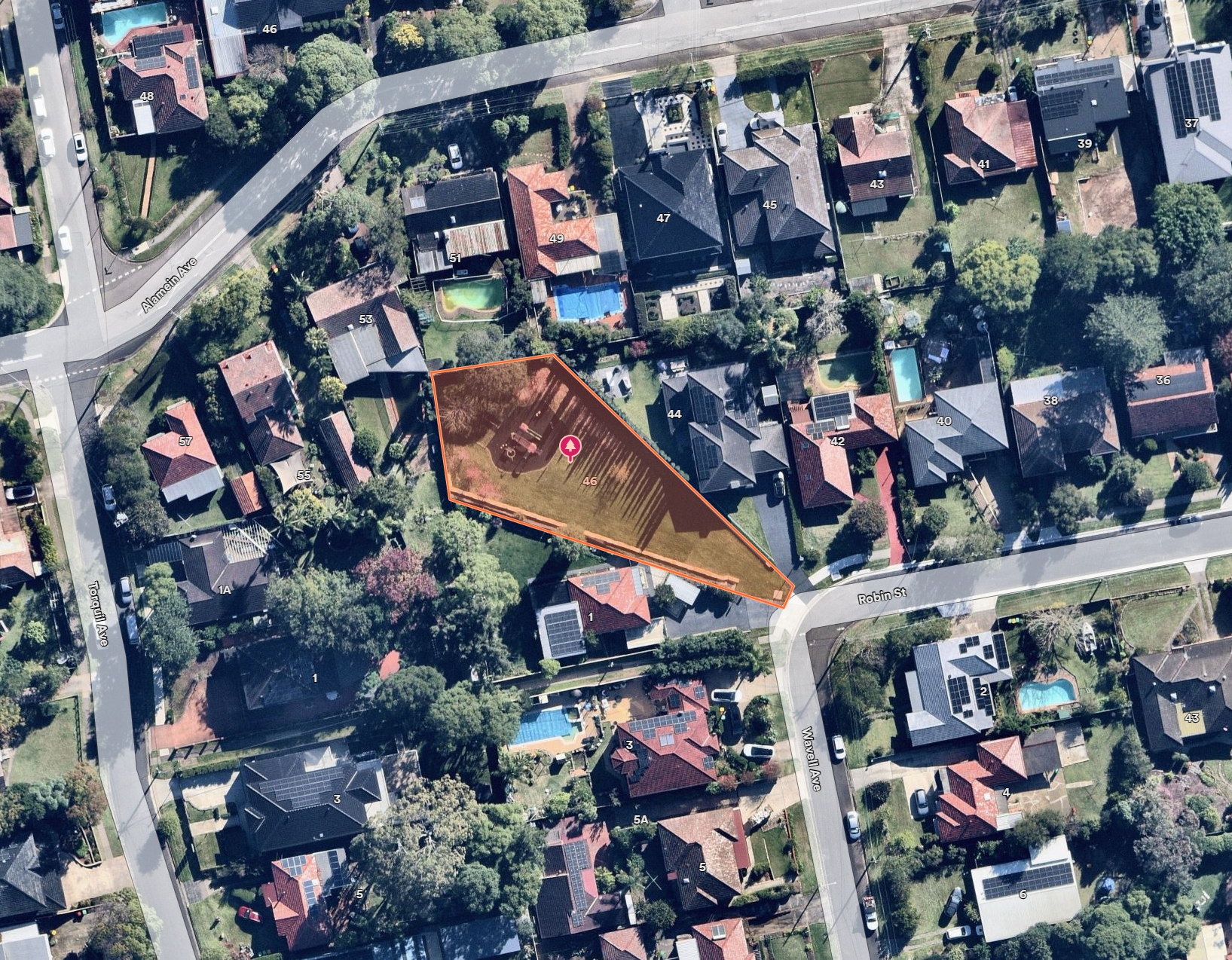
Each year a selection of playgrounds are included in Council’s annual Playground Replacement Program. Playgrounds are selected and identified from an annual playground safety audit report, informed by regular safety inspections of all playgrounds across City of Parramatta. A condition rating is calculated for each playground, which determines its priority within the Replacement Program. You can find further details on which playgrounds are due for an upgrade at: https://www.cityofparramatta.nsw.gov.au/recreation/our-parks/park-upgrades
Robin Street Park contains mostly skill-based play, with some imaginative and sensory elements.
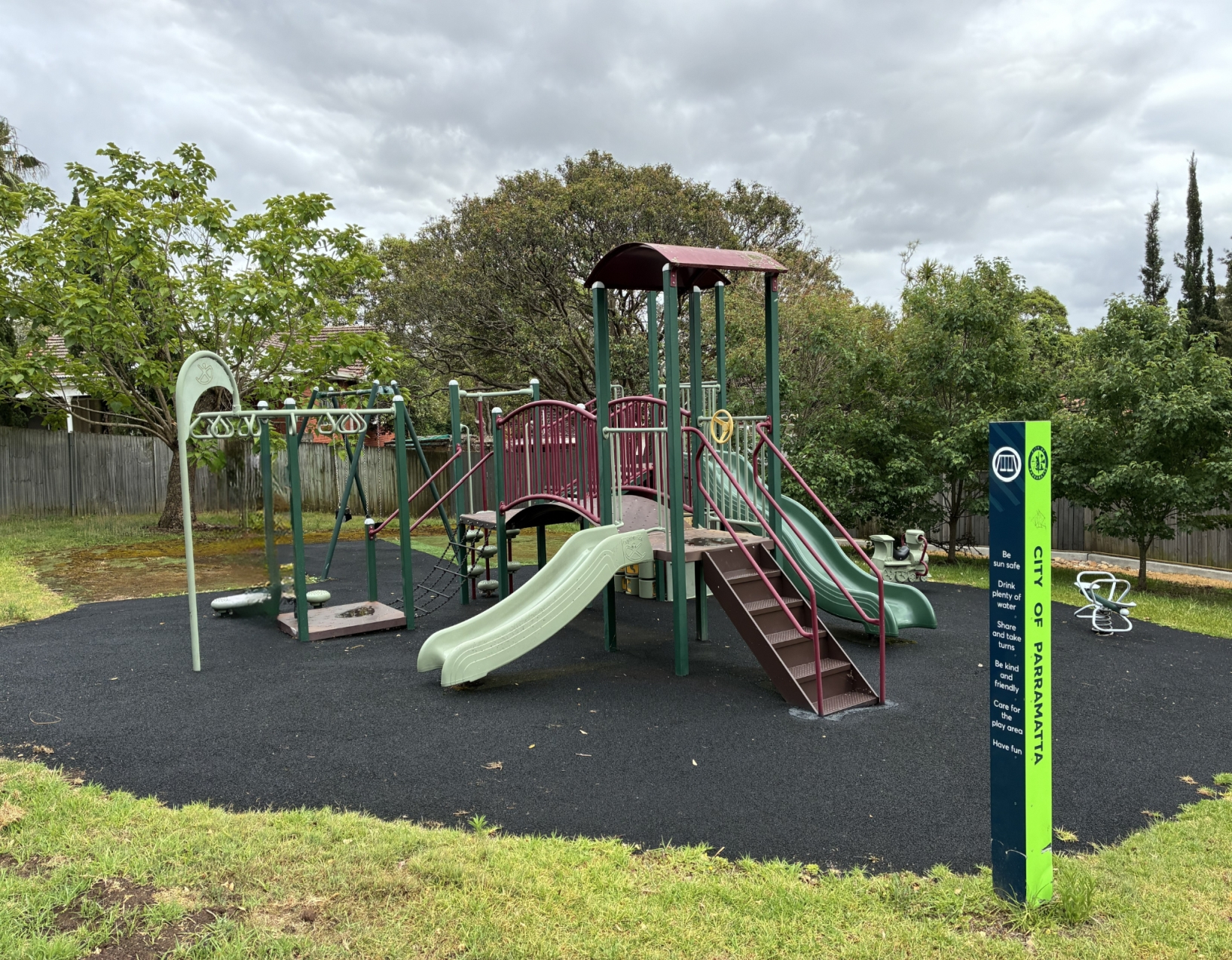
Currently, the playground and park features:
- Connected double tower structure with plastic slides, climbing net, monkey rings, shop play, climbing wall, hanging stepping pads, chimes, animal puzzle and steering wheel
- Stepping pads
- Mini train spring toy
- Double spring toy see-saw
- Double swings with toddler seat and strap seat
- One seat
- New playground equipment
- New rubber softfall surfacing
- Updated seating with back rests and arm rests
- Footpath to the playground equipment zone
- Shade tree planting
This pocket playground is not large enough to consider items such as flying fox, trampoline, water play, nature play, bin, bubbler or shade sail.
When replacing and upgrading playgrounds Council aims to improve accessibility where possible focusing on elements which have been considered alongside the NSW Government’s Everyone Can Play framework and principles. These elements include providing accessible equipment, surfaces, seating with armrests and access to playgrounds via pathways. To find out more and what playgrounds already have these elements please visit Council’s website by clicking the below links.
All feedback received during the consultation will be carefully reviewed and considered when designing the new playground and selecting new play equipment.
Council will assess the number of requests for particular types of play equipment, identify common themes and concerns raised by the community, and consider these alongside factors such as site constraints, budget, safety requirements, accessibility, maintenance needs, and the overall project scope. This helps ensure the final design balances the needs of different age groups, users, and members of the community.
While it may not be possible to incorporate every individual suggestion, sharing your ideas is important. Community feedback plays a key role in shaping the design and helps Council understand which features are most valued by the community, so these can be incorporated wherever possible.
If you would like to learn more about how Council uses community feedback to inform decisions, please visit the New to Participate page.